Org. Synth. 2026, 103, 362-387
DOI: 10.15227/orgsyn.103.0362
Synthesis of 2-Aryl Pyrimidines via an Electronically Tuned SNAr Approach
Submitting Authors:Ryan J. Sullivan,
†,*
1 Ripal Patel,
† Elnaz Latifi,
† Dino Alberico,
† and Jean-Nicolas Desrosiers
‡,*
1Checking Authors: Seiya Hosoi, Juri Sakata, and Hidetoshi Tokuyama*
21. Procedure (Note 1)
A. 5-Bromo-2-[(1,1-dimethylethyl)sulfonyl]-pyrimidine (3). A 300-mL three-necked round-bottom flask, equipped with an oval stir bar (40×20 mm), thermometer, septum, and argon bubbler with exhaust vented to a bleach/NaOH scrubber (Figure 1A) (Note 2) is charged with THF (100 mL) using a 100-mL graduated cylinder under a flow of argon (Note 3). The solution is sparged with argon via a needle (18G) inserted through the septum for 15 min. The septum is removed and 5-bromo-2-chloropyrimidine (10.00 g, 51.70 mmol, 1.00 eq) (Note 4) and sodium 2-methyl-2-propanethiolate (8.70 g, 77.6 mmol, 1.50 eq) (Note 5) are charged, then the joint closed with the septum. The pale-yellow suspension is agitated (300 rpm) at ambient temperature (Note 6), resulting in a thin yellow suspension (Figure 1B). The reaction is monitored by 1H NMR, tracking the disappearance of compound 1 resonance at 8.69 ppm and appearance of compound 2 resonance at 8.55 ppm (CDCl3). Analysis by 1H NMR indicated ca. 88-100% conversion of pyridine 1 to desired sulfide 2 after 16 h (Note 7 and 8).
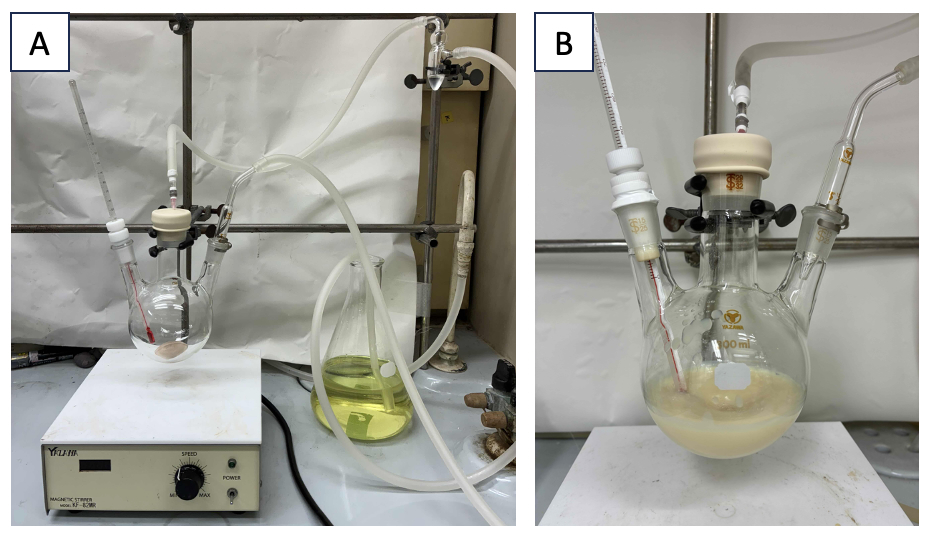
Figure 1. A. Reaction set up: Flask equipped with stir bar, thermometer, and argon bubbler with exhaust to a bleach/NaOH scrubber; B. Reaction mixture after 16 h agitation at ambient temperature (Photos were provided by the checking authors)
The reaction mixture is filtered through a pad of celite (5 g) (Note 9 and 10) in a 140-mL medium-porosity (40-100 μm) sintered glass filter funnel (Note 11), and the filter cake is washed with THF (5 mL) (Note 3). The combined filtrate and cake wash are concentrated to dryness in a 300-mL single neck round-bottom flask using a rotary evaporator (water batch 45 °C, pressure ca. 125 mbar) (Note 10 and 12), yielding a crude sulfide 2 as a yellow oil that is used directly without further analysis or purification (Note 13).
A 300-mL three-necked round-bottom flask, equipped with an oval stir bar (40×20 mm), thermometer, septum, and argon bubbler with exhaust vented to a bleach/NaOH scrubber (Note 2) (Figure 2A) is charged with the above crude 2 using dichloromethane (150 mL) (Note 14 and 15). The solution is agitated (300 rpm) and cooled to 0-5 °C using a water/ice bath (Figure 2B), then m-CPBA (11.6 g, 51.7 mmol, 1.00 eq) (Note 16) is charged as a solid in portions over ca. 20 min, while maintaining the internal temperature between 0-10 °C (Note 17), resulting in a thick white slurry (Figure 2C). After the final exotherm subsides, the reaction mixture is warmed to ambient temperature, and m-CPBA (17.4 g, 77.6 mmol, 1.50 eq) is charged as a solid in portions over ca. 20 min, while maintaining the internal temperature between 20-30 °C (Note 18). After addition is complete, the reaction is agitated (300 rpm) at ambient temperature (Figure 2D). Analysis by 1H NMR indicated complete conversion of sulfide 2 to sulfone 3 after additional 30 min (Note 19 and 20).
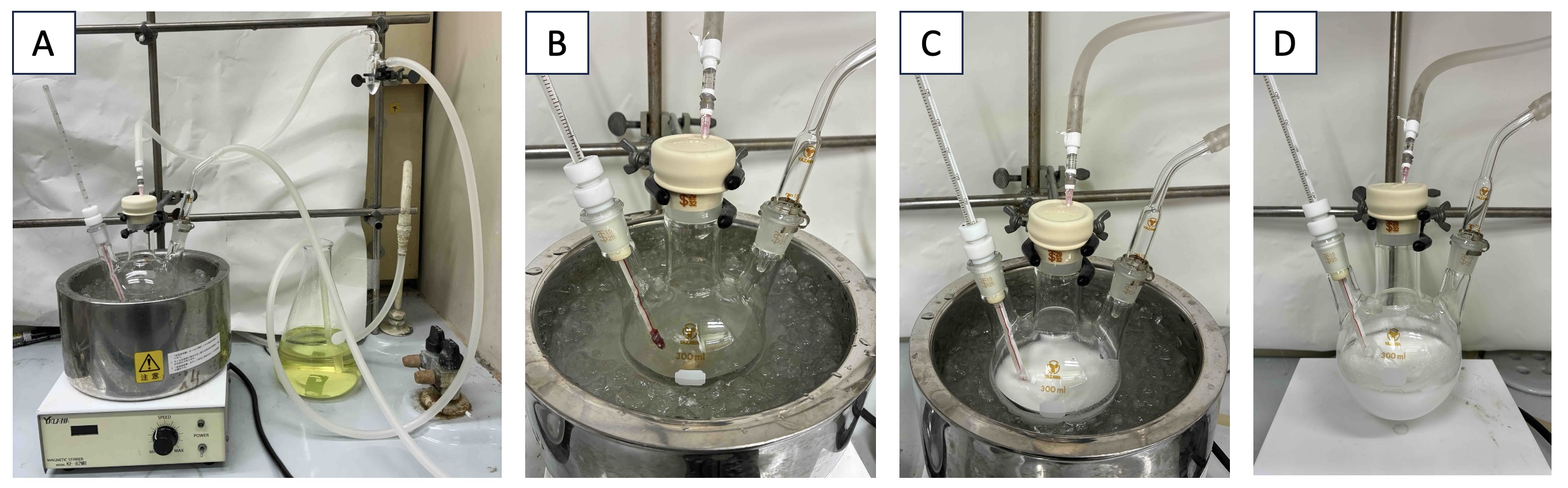
Figure 2. A. Reaction set up: Flask equipped with stir bar, thermometer, and argon bubbler with exhaust to a bleach/NaOH scrubber; B. Reaction solution of intermediate 2 in dichloromethane; C. Reaction after addition of 1 eq of m-CPBA at 0-10 °C; D. Reaction mixture after completion of remaining m-CPBA addition at ambient temperature (Photos were provided by the checking authors)
The reaction mixture is filtered through a 140-mL medium-porosity (40-100 μm) sintered glass filter funnel (Note 11), and the filter cake is washed with dichloromethane (30 mL). The filtrate and cake wash are combined and transferred to a 300-mL separatory funnel. The organic solution is washed twice with aqueous Na2S2O3 (0.63 M, 2×50 mL) (Note 21) (Figure 3A), then three times with aqueous NaHCO3 (saturated, 3×50 mL) (Note 22) (Figure 3B), then once with water (50 mL) (Figure 3C).
Figure 3. A. Appearance of layer separations for Na2S2O3 washes; B. Appearance of layer separations for NaHCO3 washes; C. Appearance of layer separation for final water wash (Photos were provided by the submitting authors)
The organic layer is transferred to a 500-mL Erlenmeyer flask and Na2SO4 (20 g) (Note 23) is added. The suspension is agitated by swirling the flask by hand for ca. 1 min, then the solids are removed by filtration through a 1400mL medium-porosity (40-100 μm) sintered glass filter funnel (Note 11) and washed with dichloromethane (30 mL). The combined filtrate and wash are concentrated to ca. 50 mL in a 300 mL single neck round-bottom flask on a rotary evaporator (water bath 45 °C, ca. 425 mbar) (Figure 4A). Heptane (150 mL) (Note 24) is added resulting in a thick suspension. The suspension is concentrated to ca. 100 mL on a rotary evaporator (water bath 45 °C, ca. 90 mbar). Additional heptane (50 mL) is added, and the thick white slurry is stirred (300 rpm) at ambient temperature for 30 min (Figure 4B). The product is collected by filtration using a 140-mL medium-porosity (40-100 μm) sintered glass filter funnel (Note 11) and washed with heptane (30 mL), then dried under high vacuum (<1 mm Hg) in a 300-mL round-bottom flask at ambient temperature for 5 h (Note 25) (Figure 4C), yielding 9.00 g white solid (62% over two steps) with 98.6 %w/w qNMR assay purity (Note 26).
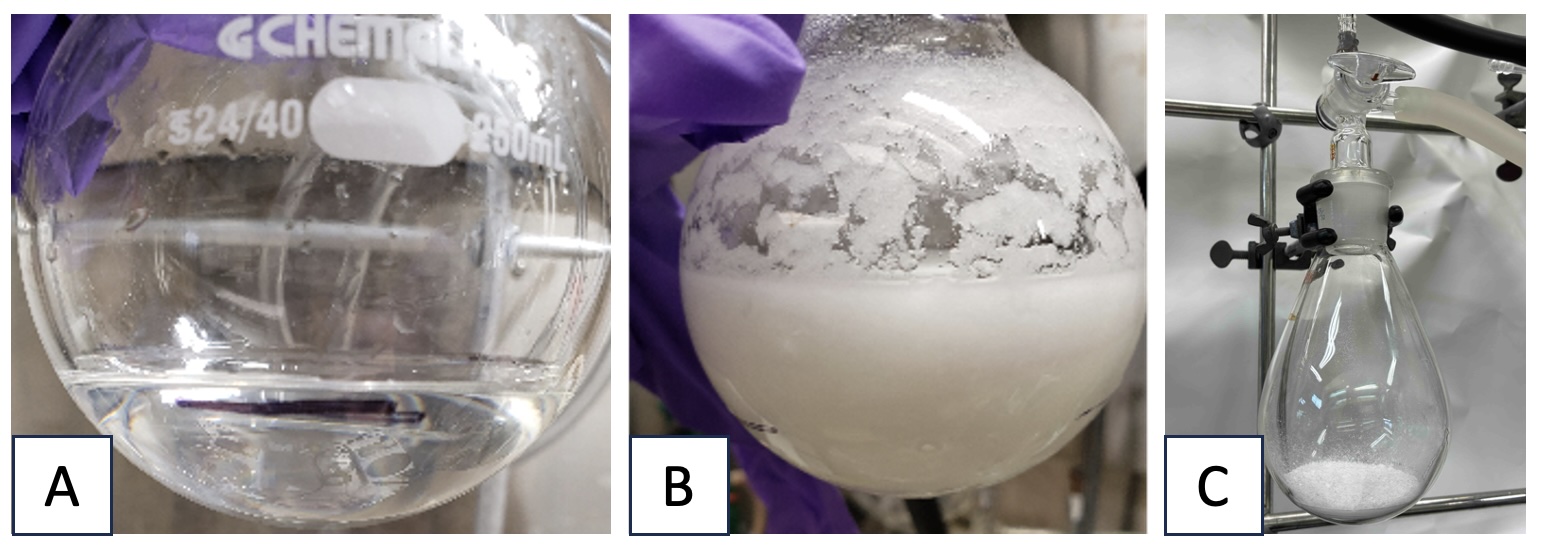
Figure 4. A. Dichloromethane solution of 3 after drying over Na2SO4 and concentrating to 50 mL; B. Suspension of 3 after solvent swap from dichloromethane to heptane; C. Isolated sulfone 3 drying under high vacuum (Photos A and B were provided by the submitting authors; Photo C was provided by the checking authors)
B. 5-Bromo-2-(pyridin-3-yl)pyrimidine (6). An oven-dried 300-mL three-necked round-bottom flask (Note 27), equipped with an oval stir bar (40×20 mm), thermometer, septum, and 50-mL pressure-equilibrating addition funnel with a septum, is connected to an argon line and oil bubbler and cooled to ambient temperature (Figure 5A). 3-Bromopyridine (3.74 g, 23.6 mmol, 1.10 eq) (Note 28) then THF (30 mL) (Note 29) are charged via syringe (5.0-mL syringe with a 21G needle) through the septum under a flow of argon and agitation started (300 rpm) (Figure 5B). i-Propyl magnesium chloride solution (2.0 M in THF, 11.8 mL, 23.6 mmol, 1.10 eq) (Note 30 and 31) is charged dropwise over ca. 5 min via syringe (20-mL syringe with an 18G needle) through the septum while maintaining the reaction temperature between 20-30 °C (Note 32). A red solution initially formed (Figure 5C) then transitioned to an orange slurry during the addition (Figure 5D). The reaction is stirred at ambient temperature for 2 h, resulting in deposition of the precipitating Grignard reagent 5 as red solids on the stir bar and flask walls (Figure 5E).
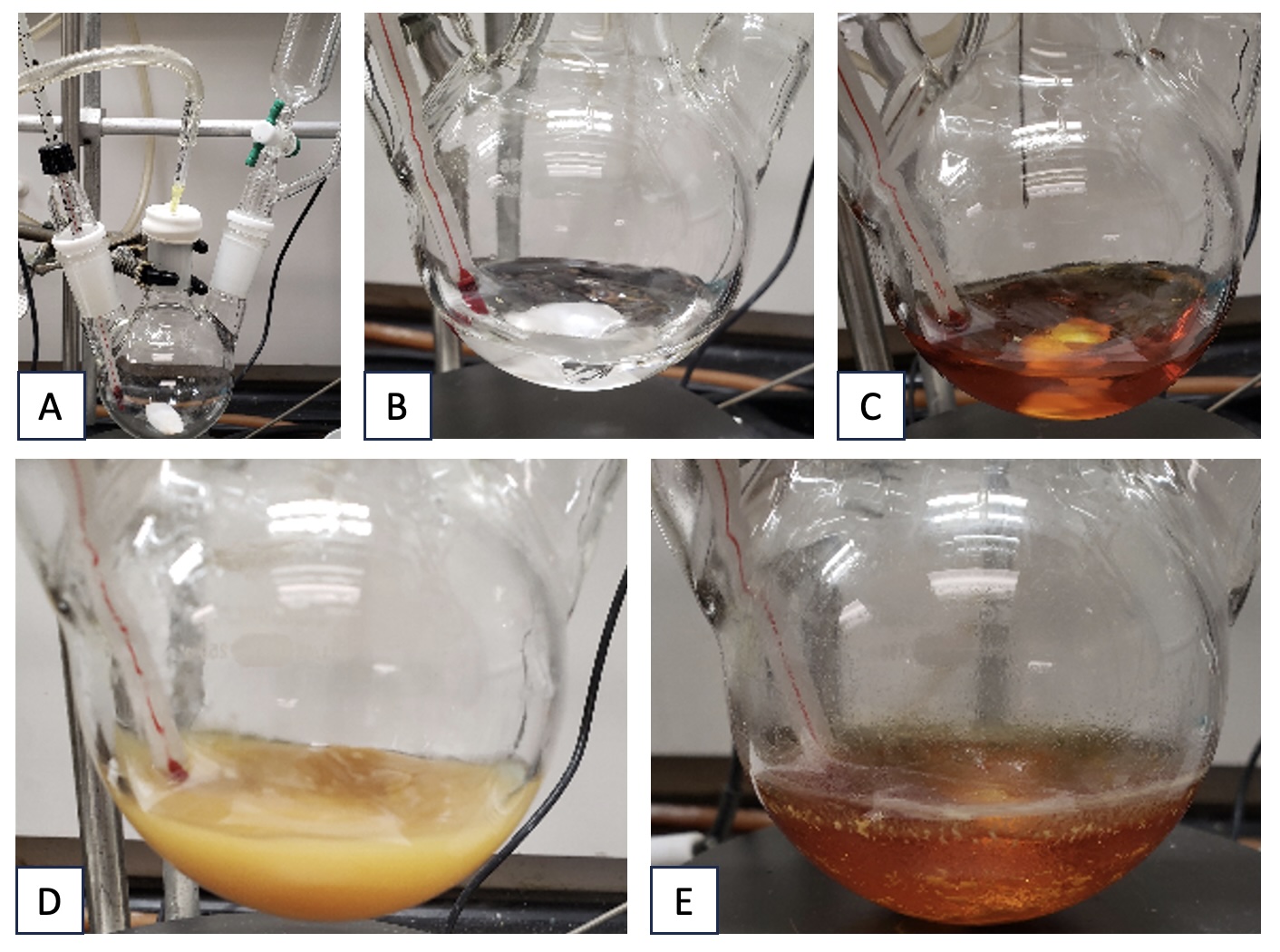
Figure 5. A. Reaction set up: Flask equipped with stir bar, thermometer, pressure equilibrized addition funnel and argon line; B. Solution of compound 4 in THF before i-PrMgCl addition; C. Reaction mixture after start of i-PrMgCl addition; D. Reaction mixture after completion of i-PrMgCl addition; E. Reaction mixture after stirring 2 h at ambient temperature following completion of i-PrMgCl addition (Photos were provided by the submitting authors)
A second oven-dried 300-mL three-necked round-bottom flask, equipped with three septa is cooled to ambient temperature under argon atmosphere. One septum is removed and sulfone 3 (6.00 g, 21.5 mmol, 1.00 eq) is charged, then the septum is replaced. THF (120 mL) (Note 29) is charged by syringe (100-mL syringe with an 18G needle) in two portions through one of the septa, resulting in a colorless solution. The THF solution of 3 is transferred to the pressure equilibrating addition funnel attached to the first reaction flask via cannula (18G) in portions as space allowed (Figure 6A). The THF solution of 3 is added from the addition funnel to the suspension of Grignard reagent 5 over ca. 20 min while maintaining the reaction temperature between 20-25 °C using water bath (Note 33). As the solution of 3 is added to the suspension of Grignard reagent 5, all solids dissolved, and a very dark red solution formed (Figure 6B). After the addition is complete, the flask used to prepare the THF solution of 3 and the cannula line are rinsed forward to the reaction mixture with THF (20 mL) (Note 29). The resulting dark red solution is stirred at ambient temperature (Figure 6C). After 16 h, 1H NMR analysis indicated complete consumption of sulfone 3 (Note 34). The reaction can alternatively be monitored by UPLC (Note 35). Aqueous NH4Cl (2.4 M, 30 mL) (Note 36) is added via the pressure equilibrating additional funnel over ca. 5 min (Note 37) resulting in a light red, biphasic solution (Figure 6D).
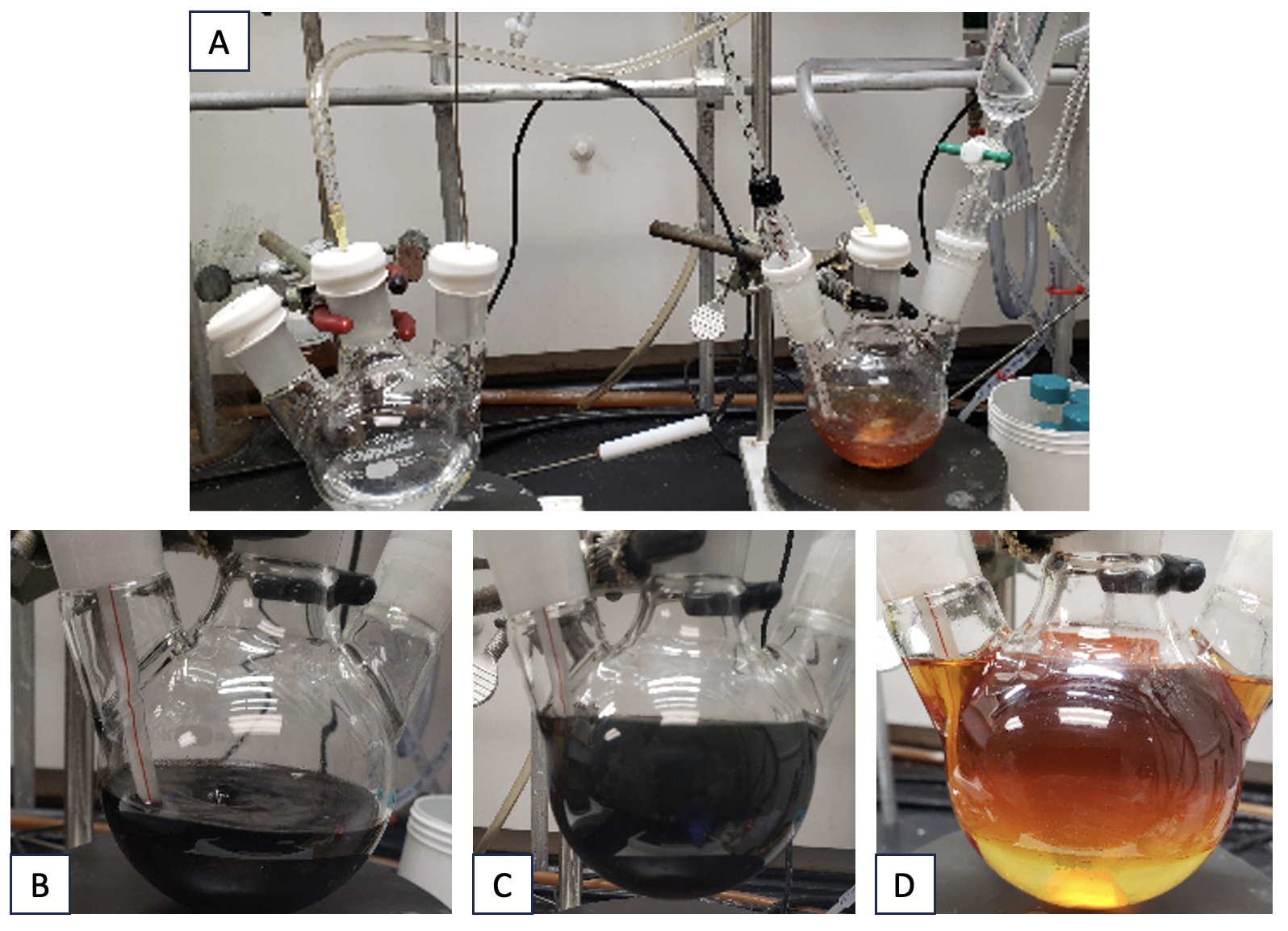
Figure 6. A. Transfer of THF solution of sulfone 3 to addition funnel via cannula; B. Reaction mixture after addition of ca. 10% of sulfone 3 solution; C. Reaction mixture after completion of sulfone 3 addition and stirring at ambient temperature 16 h; D. Reaction mixture after quenching with NH4Cl solution (Photos were provided by the submitting authors)
The biphasic solution is transferred to a 300-mL separatory funnel (Figure 7A). The phases are separated, and the upper, organic layer is retained, while the lower, aqueous phase is returned to the separatory funnel. Additional water (5 mL) is added to the separatory funnel, and the solution extracted twice with EtOAc (2×50 mL) (Note 38) (Figure 7B, 7C). The two EtOAc extracts are combined and retained separately from the original THF layer.
Figure 7. A. Appearance of layer separation for first THF / NH4Cl cut; B. Appearance of layer separation for first EtOAc extraction; C. Appearance of layer separation for second EtOAc extraction (Photos were provided by the submitting authors)
The retained THF layer is transferred to a 500-mL single neck round-bottom flask and concentrated to ca. 30-40 mL on a rotary evaporator (water bath 45 °C, ca. 225 mbar), resulting in an orange suspension (Figure 8A). To this suspension is added the retained EtOAc extracts (Figure 8B), and the mixture again concentrated to ca. 30-40 mL on a rotary evaporator (water bath 45 °C, ca. 125 mbar) (Figure 8C). To the resulting suspension is charged i-PrOH (60 mL) (Note 39) (Figure 8D), and the mixture concentrated to ca. 30-40 mL on a rotary evaporator (water bath 45 °C, ca. 125 mbar), followed by one more addition of i-PrOH (60 mL), and concentration to ca. 30-40 mL on a rotary evaporator (water bath 45 °C, ca. 125 mbar) (Figure 9E).
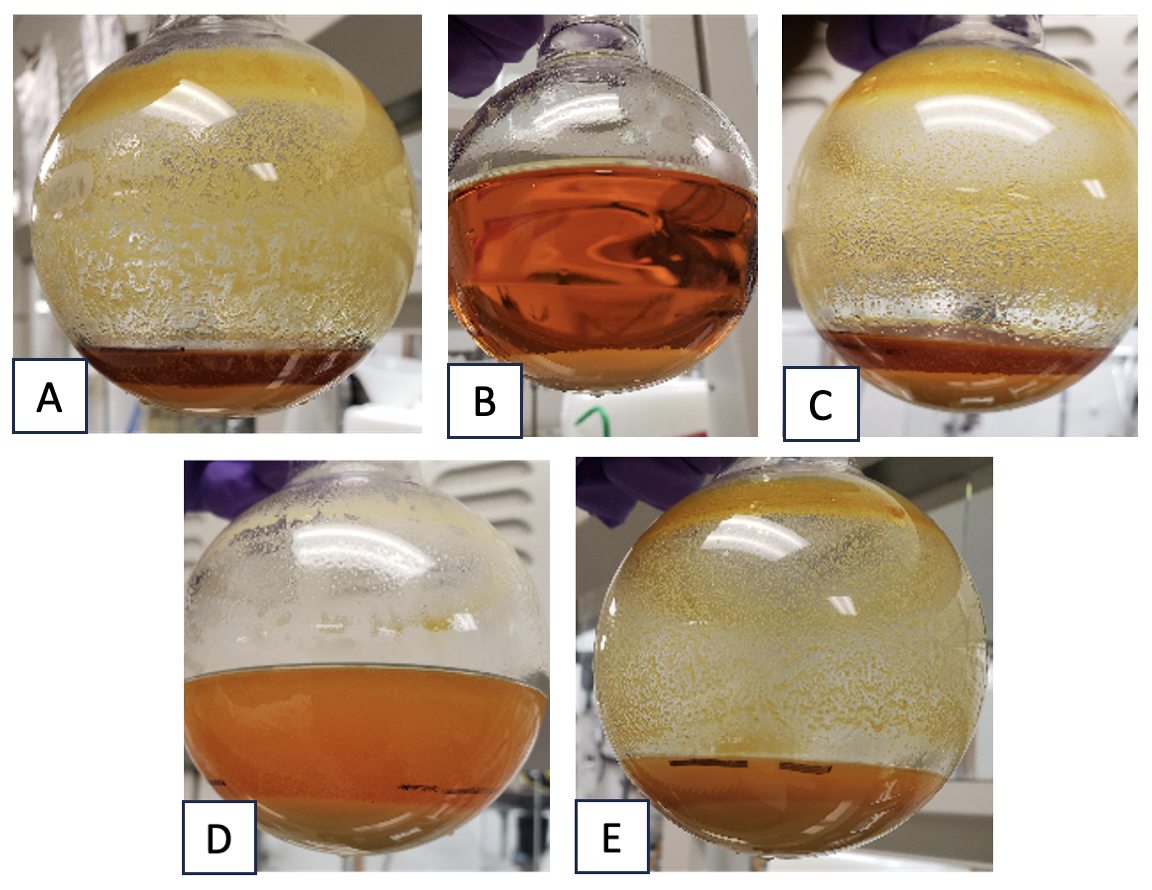
Figure 8. A. Product suspension after concentration of THF layer to 30-40 mL; B. Product suspension after addition of EtOAc extracts; C. Product suspension after 2nd concentration to 30-40 mL; D. Product suspension after 1st i-PrOH addition; E. Product suspension after final concentration to 30-40 mL (Photos were provided by the submitting authors)
To the suspension is charged an oval stir bar (40×20 mm), the flask is equipped with a water-cooled reflux condenser, and the mixture heated to reflux for 30 min using an oil bath (Figure 9A) (Note 40). The heat source is removed and the mixture allowed to cool to ambient temperature. After ca. 1 h, the reflux condenser is removed and the temperature of the slurry is confirmed by thermometer to be between 19-25 °C. A pressure equilibrating addition funnel is attached to the flask, and water (30 mL) is charged via the addition funnel over ca. 15 min (Figure 9B). The slurry is stirred at ambient temperature for 1 h (Figure 9C), then the solids are collected by filtration using a 6.5 cm Büchner funnel equipped with Advantech Qualitative filter paper No. 1 (55 mm) (Note 41), washed with 1:1 water : i-PrOH (15 mL), and dried under high vacuum in a 100 mL round-bottom flask at ambient temperature for 16 h (Note 25) (Figure 9D), yielding 3.69 g of pale orange solid (73%) with 98.7 %w/w purity as determined by qNMR (Note 42,43,44).
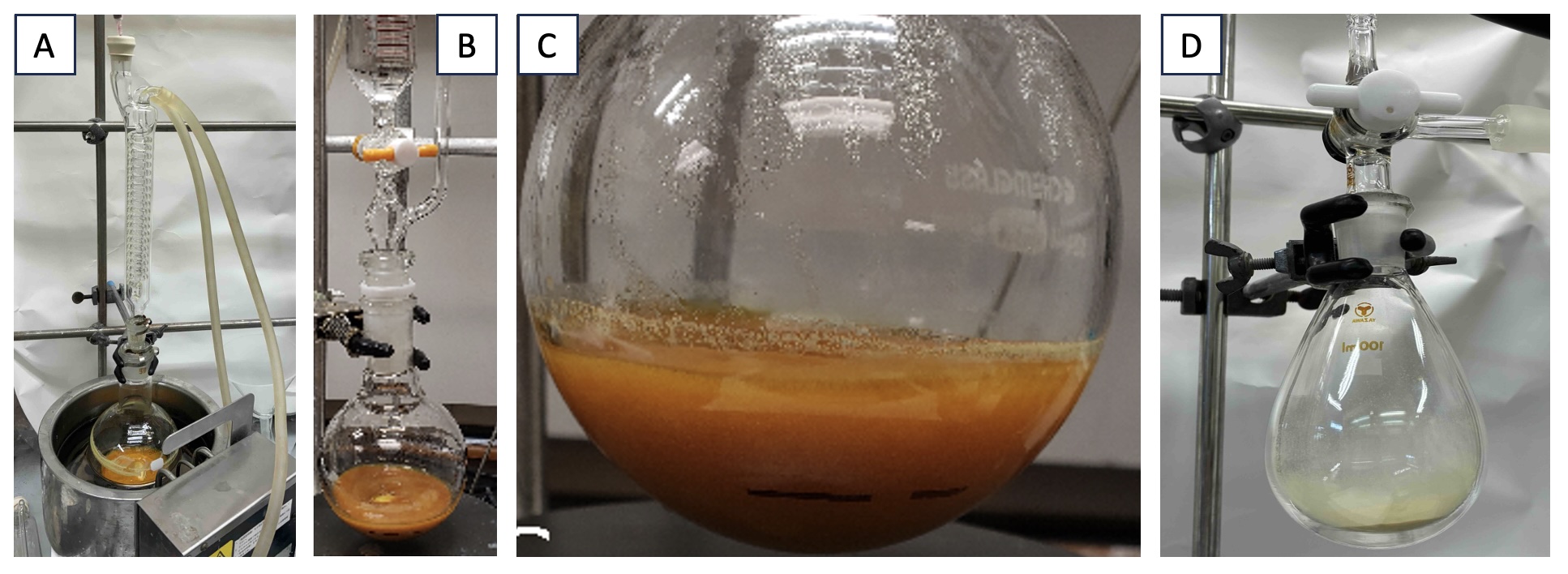
Figure 9. A. Product suspension heating at reflux; B. Addition of water via addition funnel after cooling to ambient temperature; C. Product slurry after water addition complete and agitating 1 h; D. Product 6 drying under high vacuum. (Photos A and D were provided by the checking authors and Photos B and C were provided by submitting authors)
2. Notes
1. Prior to performing each reaction, a thorough hazard analysis and risk assessment should be carried out with regard to each chemical substance and experimental operation on the scale planned and in the context of the laboratory where the procedures will be carried out. Guidelines for carrying out risk assessments and for analyzing the hazards associated with chemicals can be found in references such as Chapter 4 of "Prudent Practices in the Laboratory" (The National Academies Press, Washington, D.C., 2011; the full text can be accessed free of charge at
https://www.nap.edu/catalog/12654/prudent-practices-in-the-laboratory-handling-and-management-of-chemical. See also "Identifying and Evaluating Hazards in Research Laboratories" (American Chemical Society, 2015) which is available via the associated website "Hazard Assessment in Research Laboratories" at
https://www.acs.org/about/governance/committees/chemical-safety.html. In the case of this procedure, the risk assessment should include (but not necessarily be limited to) an evaluation of the potential hazards associated with
3-bromopyridine,
5-bromo-2-chlorpyrimidine,
iso-propyl magnesium chloride,
meta-chloroperbenzoic acid,
sodium 2-methyl-2-propanethiolate, as well as the proper procedures for manipulating air sensitive reagents and working with stench compounds. In addition to stench,
sodium 2-methyl-2-propanethiolate is also a skin and respiratory sensitizer. Information about handling precautions is given in
Note 6.
2. To prepare a bleach /
NaOH scrubber, ca. 500 mL of household bleach (4+%) and 100 mL of 6 M
NaOH are combined in a 1 L Erlenmeyer flask. The outlet from the argon bubbler is submerged in the bleach /
NaOH solution.
3.
THF (reagent grade) is purchased from Tokyo Kasei Kogyo Co., Inc. and used as received.
4.
5-bromo-2-chlorpyrimidine (98%) is purchased from Oakwood Chemicals and used as received.
5.
Sodium 2-methyl-2-propanethiolate (technical grade, 90%) is purchased from Oakwood Chemicals and used as received.
Sodium 2-methyl-2-propanethiolate is a stench compound, skin sensitizer, and respiratory sensitizer, and should be handled only inside a fume hood with good ventilation. All glassware used to handle
sodium 2-methyl-2-propanethiolate or reaction mixtures containing residual
sodium 2-methyl-2-propanethiolate should be decontaminated with bleach, then washed with
MeOH and water inside the fume hood, before removing from the fume hood for further cleaning if required.
6. Ambient temperature throughout refers to temperatures between 19-25 °C.
7. The submitting author recommended that care must be taken to avoid odor release if using NMR to monitor the reaction. It is recommended to use a J-Young tube, and wash / decontaminate the outside of the NMR tube using bleach, followed by water then acetone after sealing the sample inside, before removing from the fume hood.
8. The submitting author described that the reaction can alternatively be monitored UPLC. Analysis by UPLC indicated ca. 95% conversion of pyridine
1 to desired sulfide
2. UPLC conditions: ACQUITY UPLC HSS T3 column, 1.8 μm, 2.1×50 mm, detection at 275 nm. Mobile phase A: 0.05% TFA in water. Mobile phase B:
MeCN. Column temperature 45 °C. Flow rate 0.65 mL/min. Gradient shown in Table 1.
Figure 10. Example UPLC trace for monitoring reaction conversion for transformation of compound 1 to compound 2
9.
Celite (Hyflo Supercel
Celite Diatomaceous earth, flux-calcined) is purchased from Oakwood Chemicals and used as received. The exhaust from the vacuum pump is directed to a bleach /
NaOH scrubber (for preparation of the scrubber solution see
Note 2).
10. SIBATA Scientific Technology product number 17GP100. The submitting author used a 110 mL disposable PE filter funnel (ChemGlass product number OP-6602-14) and described that a Büchner funnel with Whatman grade 1 filter paper can alternatively be used.
11. The rotary evaporator used for this operation is recommended to be contained inside a fume hood.
12. Compound
2 may solidify on standing to a pale-yellow solid.
13. Crude intermediate
2 contains residual
t-BuSH. Due to the volatility and low odor threshold (0.33 ppb), as well as skin and respiratory sensitizer properties of
t-BuSH, a sample of
2 is not purified to obtain characterization data of a pure sample, and it is not recommended to do so.
1H NMR spectra of the crude
2 is provided. It is recommended to telescope intermediate
2 directly to sulfone
3 before further manipulation. After oxidation, all stench compounds are destroyed and risk of exposure to respiratory sensitizers is reduced.
14.
Dichloromethane (reagent grade) is purchased from Sigma-Aldrich Co. LLC. and used as received.
pdf15. Initially, crude
2 is dissolved in 50 mL of
dichloromethane, and the solution is transferred using a dry pipette. The flask that contained the crude product is then rinsed with the remaining 100 mL of
dichloromethane in three portions.
16.
m-CPBA (77%) is purchased from Sigma-Aldrich Co. LLC. and used as received.
17. A mild exotherm is observed after each addition of
m-CPBA. The exotherm is controlled by adding
m-CPBA in small portions (ca. 800 mg in ca. 15 portions), observing an exotherm from ca. 0-5 to 5-10 °C after each addition. The reaction is allowed to cool back to 0-5 °C before the next addition. If the temperature exceeds 10 °C there is no severe negative impact to the process. Temperature excursions to 30 °C are tolerated with negligible to minor decrease in yield.
18. A mild exotherm is observed after each addition of
m-CPBA. The exotherm is controlled by adding
m-CPBA in small portions (ca. 1.2 g in ca. 15 portions), observing an exotherm from ca. 20-25 to 25-30 °C after each addition. The reaction is allowed to cool back to 20-25 °C before the next addition. If the temperature exceeds 30 °C there is no severe negative impact to the process. Temperature excursions to 35 °C are tolerated with no noticeable impact on reaction outcome. The final additions of
m-CPBA will exhibit little to no exotherm. If the
m-CPBA is added at 0-5 °C instead of 20-25 °C, it will result in no consumption of
m-CPBA during the addition and then a delayed exotherm upon warming to ambient temperature. It is therefore safer to add the second equivalent of
m-CPBA at 20-25 °C and control the exotherm through
m-CPBA dosing.
19. The reaction is monitored by tracking the disappearance of compound
2 resonance at 8.55 ppm and appearance of compound
3 resonance at 9.04 ppm (in CDCl
3). Complete consumption of compound
2 is expected as monitored by
1H NMR.
20. The submitting author described that the reaction can alternatively be monitored UPLC. Analysis by UPLC indicated complete conversion of sulfide
2 to sulfone
3. UPLC conditions: ACQUITY UPLC HSS T3 column, 1.8 μm, 2.1×50 mm, detection at 265 nm. Mobile phase A: 0.05% TFA in water. Mobile phase B:
MeCN. Column temperature 45 °C. Flow rate 0.65 mL/min. Gradient shown in Table 2.
Figure 11. Example UPLC trace for monitoring reaction conversion for transformation of compound 2 to compound 3
21.
Na2S2O3·5H2O (reagent grade) is purchased from FUJIFILM Wako Pure Chemical Corporation and used as received. To confirm that
m-CPBA is fully consumed by the quench with
Na2S2O3, both organic and aqueous layers can be tested by KI-starch paper.
22.
NaHCO3 (reagent grade) is purchased from FUJIFILM Wako Pure Chemical Corporation and used as received. pH of 1
st NaHCO3 wash is ca. 7. pH of 2
nd and 3
rd NaHCO3 washes are ca. 10.
23.
Na2SO4 (reagent grade) is purchased from Nacalai Tesque, Inc. and used as received.
24.
Heptane throughout refers to
n-heptane.
n-Heptane (reagent grade) is purchased from FUJIFILM Wako Pure Chemical Corporation and used as received.
25. The product can alternatively be dried in a vacuum oven at 30-40 °C, or under vacuum counterbalanced with nitrogen if building nitrogen supply is available.
26. Characterization data of
5-bromo-2-[(1,1-dimethylethyl)sulfonyl]-pyrimidine (
3):
1H NMR
pdf (400 MHz, CDCl
3): δ 9.04 (s, 2H), 1.48 (s, 9H).
13C NMR
pdf (100 MHz, CDCl
3): δ 162.3, 159.1, 123.8, 61.1, 23.7. IR (neat, cm
-1)
νmax: 3092, 3041, 2989, 2975, 2926, 1542, 1470, 1394, 1308, 1207, 1113, 1098, 1012, 804, 780, 770, 664, 632, 586, 513. HRMS (ESI+)
m/z [M+H]
+ calculated for C
8H
12BrN
2O
2S, 278.9797; found 278.9795. Melting point: 178.3-180.1 °C. The compound is stable on the benchtop at ambient temperature (19-25 °C) under air. Purity was determined by qNMR
pdf using
1,3,5-trimethoxybenzene (99.9%, Sigma-Aldrich) as an internal standard.
27. Glassware with stir bar is dried at 130 °C in a glassware drying oven several hours, then assemble while hot and cooled to ambient temperature under argon atmosphere. Nitrogen atmosphere can also be used instead of argon atmosphere.
28.
3-Bromopyridine (99%) is purchased from Oakwood Chemicals and used as received.
29. All
THF used for this step is anhydrous grade, stabilized with 250 ppm BHT, purchased from Tokyo Kasei Kogyo Co., Inc. and used as received. Use of un-stabilized
THF can lead to impurities related to radical addition to sulfone
3.
30. 2.0 M
i-PrMgCl solution in
THF is purchased from Sigma-Aldrich Co. LLC. and used as received. Potency is taken from the certificate of analysis.
31. The Grignard reagent can also be formed using other reagents, e.g.,
i-PrMgCl·LiCl, or CyMgCl with no impact on the reaction outcome. Grignard reagents formed directly from Magnesium turnings, and commercial Grignard reagents in the form ArMgBr, have also been used successfully in this S
NAr chemistry.
32. A very mild exotherm from 20 to 23 °C is observed during
i-PrMgCl addition. No external cooling is required.
33. A mild exotherm occurs during sulfone addition. A cool water bath is placed under the reaction mixture and addition slowed or paused once the reaction temperature approaches 25 °C. Once reaction temperature cools back closer to 20 °C the cool water bath is removed. Usually, it is necessary to use the cool water bath twice during the addition of the sulfone to maintain temperature in the desired range. There is no detrimental impact if the addition is conducted over shorter or longer time than the prescribed ca. 20 min. No detrimental impact has been observed for addition times between 10-60 min.
34. The reaction is monitored by tracking the disappearance of compound
3 resonance at 9.04 ppm and appearance of compound
6 resonance at 8.86 ppm (in CDCl
3). Complete consumption of compound
3 is expected as monitored by
1H NMR.
35. The submitting author described that the reaction can alternatively be monitored UPLC. Analysis by UPLC indicated complete consumption of sulfone
3 and a ca. 96:4 ratio of desired product
6 to 6-addition impurity
7(Figure 12)
.Figure 12. Structure of 6-addition impurity.
UPLC conditions: ACQUITY UPLC HSS T3 column, 1.8 μm, 2.1×50 mm, detection at 265 nm. Mobile phase A: 0.05% TFA in water. Mobile phase B: MeCN. Column temperature 45 °C. Flow rate 0.65 mL/min. Gradient shown in Table 3.
Figure 13. Example UPLC trace for monitoring reaction conversion for transformation of compound 2 to compound 3
36.
NH4Cl (reagent grade) is purchased from FUJIFILM Wako Pure Chemical Corporation and used as received.
37. A very mild exotherm from 19 to 22 °C is observed during the initial stages of
NH4Cl charge. No external cooling is required. pH of aq. layer is between 6-7.
38.
EtOAc (technical grade) is purchased from Nacalai Tesque, Inc. and used as received.
39.
i-PrOH (reagent grade) is purchased from Sigma-Aldrich Co. LLC. and used as received.
40. The submitting authors used a heating mantle instead of an oil bath.
41. The submitting authors used a 60 mL disposable PE filter funnel (ChemGlass product number OP-6602-12) and described that a Büchner funnel with Whatman grade 1 filter paper can alternatively be used.
42. The checking authors performed a second reaction at half-scale (10.8 mmol scale) and received 1.76 g (69%) of the product with 99.0 %w/w purity by qNMR using
1,3,5-trimethoxybenzene as an internal standard.
43. Characterization data of
5-bromo-2-(pyridin-3-yl)pyrimidine (
6):
1H NMR
pdf (400 MHz, CDCl
3): δ 9.62 (dd,
J = 2.4, 0.8 Hz, 1H), 8.87 (s, 2H), 8.74 (dd,
J = 4.8, 1.6 Hz, 1H), 8.66 (dt,
J = 8.0, 2.0 Hz, 1H), 7.42 (ddd,
J = 8.0, 4.8, 0.8 Hz, 1H).
13C NMR
pdf (100 MHz, CDCl
3): δ 161.1, 158.0, 151.7, 149.8, 135.4, 132.0, 123.4, 119.1. IR (neat, cm
-1)
νmax: IR (neat, cm
-1)
νmax: 3030, 1587, 1577, 1542, 1528, 1408, 1365, 1328, 1126, 1013, 928, 828, 778, 701, 640, 619, 545, 514. HRMS (ESI+)
m/z [M+H]
+ calculated for C
9H
7BrN
3, 235.9818; found 235.9822. Melting point: 166.2-168.1 °C. The compound is stable on the benchtop at ambient temperature (19-25 °C) under air. Purity was determined by qNMR
pdf using
1,3,5-trimethoxybenzene (98.7%, Sigma-Aldrich) as an internal standard.
44. Compound
6 can alternatively be purified using column chromatography on silica gel. The
THF and
EtOAc extracts after workup are combined and concentrated to dryness. ca. 20 g/g silica gel (with respect to input sulfone
3) is packed in a column and wetted with 7:3
heptane:
EtOAc. The crude
6 is dissolved in minimal
dichloromethane and loaded to the column, then eluted with 7:3
heptane:
EtOAc and monitored by TLC. 80-85% isolated yield is obtained by concentration of conforming fractions.
Working with Hazardous Chemicals
The procedures in
Organic Syntheses are intended for use only by persons with proper training in experimental organic chemistry. All hazardous materials should be handled using the standard procedures for work with chemicals described in references such as "Prudent Practices in the Laboratory" (The National Academies Press, Washington, D.C., 2011; the full text can be accessed free of charge at
http://www.nap.edu/catalog.php?record_id=12654). All chemical waste should be disposed of in accordance with local regulations. For general guidelines for the management of chemical waste, see Chapter 8 of Prudent Practices.
In some articles in Organic Syntheses, chemical-specific hazards are highlighted in red "Caution Notes" within a procedure. It is important to recognize that the absence of a caution note does not imply that no significant hazards are associated with the chemicals involved in that procedure. Prior to performing a reaction, a thorough risk assessment should be carried out that includes a review of the potential hazards associated with each chemical and experimental operation on the scale that is planned for the procedure. Guidelines for carrying out a risk assessment and for analyzing the hazards associated with chemicals can be found in Chapter 4 of Prudent Practices.
The procedures described in Organic Syntheses are provided as published and are conducted at one's own risk. Organic Syntheses, Inc., its Editors, and its Board of Directors do not warrant or guarantee the safety of individuals using these procedures and hereby disclaim any liability for any injuries or damages claimed to have resulted from or related in any way to the procedures herein.
3. Discussion
2-Aryl and 2-alkyl pyrimidines are common structural motifs in biologically active compounds,
3 and are often accessed by
de novo or cross-coupling approaches.
4 Widely applicable methods for functionalization of 2-halopyrimidines however are much more limited than for 2-halopyridines, that readily undergo a variety of high-yielding transformations.
5 This is due to two factors: First, the inherent sensitivity of the pyrimidine ring towards competing nucleophilic attack at the 6-position, and second high susceptibility towards competing hydrolysis at the 2-position.
To overcome these challenges cross-coupling approaches based on activation of 2-pyrimidylsufides
6, or 2-pyrimidyl allyl sulfones
7 have been developed, but require the use of transition metal catalysts. The S
NAr approach using 2-pyrmidyl sulfones reported by our groups in 2024 overcomes many of the challenges for preparation of 2-functionalized pyrimidines by providing a widely applicable approach operating under mild conditions, without the use of transition metal catalysts, and amenable for safe and efficient scale-up.
8Numerous synthetic routes to access 2-pyrimidyl sulfones from commercially available 2-chloropyrimidines are available, and several scalable options are presented in the supporting information of reference
8. A telescoped S
NAr reaction with NaS
tBu followed by oxidation with
m-CPBA is a convenient option on laboratory scale, but any other synthetic route to sulfone
3 can be utilized.
A wide substrate scope is accessible, including both 2-aryl and 2-alkyl substituted pyrimidines (Table 4). Electron withdrawing and donating groups, moderate steric bulk, and various heterocycles are tolerated on the aryl Grignard reagent. Primary and cyclopropyl alkyl Grignard reagents can also be successfully employed. A variety of electronic withdrawing groups are tolerated at the 5-position of the pyrimidyl sulfone but are not required for the desired reactivity. 2-(tert-Butylsulfonyl)pyrimidine also engages in the desired SNAr reaction.
Table 4. Scope of the SNAr Methodology
Limitations of the methodology are also understood. Strong electron donating substituents on the pyrimidine ring (e.g., 5-methoxy) are not tolerated, with C-6 addition becoming the major reaction pathway. Strong directing group such as amides at the 5-position of the pyrimidine also change the reaction outcome by directing the Grignard reagent to the 6-position. Lastly, alkyl Grignard reagents with increased steric bulk (e.g., non-cyclic secondary alkyl Grignard reagents) also favor addition to the 6-position rather than displacement of the sulfone.
Appendix
Chemical Abstracts Nomenclature (Registry Number)
3-bromopyridine (626-55-1)
5-bromo-2-chlorpyrimidine (1) (32779-36-5)
ammonium chloride (12125-02-9)
Celite (68855-54-9)
dichloromethane (75-09-2)
ethyl acetate (EtOAc) (141-78-6)
iso-propanol (i-PrOH) (67-63-0)
iso-propyl magnesium chloride (i-PrMgCl) (1068-55-9)
meta-chloroperbenzoic acid (m-CPBA) (937-14-4)
n-heptane (142-82-5)
sodium 2-methyl-2-propanethiolate (29364-29-2)
sodium bicarbonate (144-55-8)
sodium sulfate (7757-82-6)
sodium thiosulfate pentahydrate (10102-17-7)
tetrahydrofuran (THF) (109-99-9)

|
Ryan Sullivan born and raised in Ontario, Canada. He obtained his M.Sc. in Chemistry in 2015 from the University of Guelph under the supervision of Professor Marcel Schlaf. He completed his Ph.D. in Chemistry at the University of Ottawa in 2020 under the supervision of Professor Stephen Newman. Following this he joined the Chemical Process Research and Development group at Eurofins CDMO Alphora Inc., where he is currently a Principal Scientist developing scalable processes for production of a of Active Pharmaceutical Ingredients. |

|
Ripal Patel received his M.Sc. degree in organic chemistry from Sardar Patel University, Gujarat, India in 2002. After graduation, he started his industrial career as a Research Associate at Zydus Pharmaceuticals. In 2005 he moved to Alembic Research Centre as a Research Scientist, where he worked in process development and optimization for generic APIs, including filing a patent for "An improved process for the preparation of Alfuzosin and its novel polymorph''. In 2008 he moved to Canada and in 2009 started working at Eurofins CDMO Alphora (formerly Alphora Research Inc.), where he is currently a Sr. Research Scientist. |

|
Elnaz Latifi obtained her B.Sc. in Chemistry from the University of Tehran and completed her M.Sc. in Chemistry at Tarbiat Modares University. She received her Ph.D. in 2017 from the University of Guelph under the supervision of Professor Marcel Schlaf. Her doctoral research focused on the development of Iridium and Ruthenium-Triphos complexes as homogeneous catalysts for the hydrogenation of biomass-derived substrates. In 2021, she joined Eurofins CDMO Alphora Inc. in the Process Research and Development group as a Senior Research Scientist. |

|
Dino Alberico received his B.Sc. from McMaster University and M.Sc. from the University of Guelph with Professor Adrian L. Schwan. He completed his Ph.D. at the University of Toronto in 2005 with Professor Mark Lautens. He then completed a Postdoctoral Fellow working with Professor André B. Charette at the Université de Montréal. Dino joined Eurofins CDMO Alphora (previously Alphora Research Inc.) in 2008 as a Senior Research Scientist. He is currently Vice President of Research and Development and Solid State R&D. His work at Eurofins Alphora focuses on the development and manufacturing of Active Pharmaceutical Ingredients. |

|
Nick Desrosiers received his bachelor's degree at the University of Montreal in 2003. He obtained his Ph.D. in 2008 under the supervision of Prof. André B. Charette. In 2008, he joined the research group of Prof. Eric N. Jacobsen at Harvard University as a NSERC postdoctoral fellow. In 2010, Nick joined the Chemical Development department of Boehringer-Ingelheim in Ridgefield, CT. He then moved to the Chemical Research and Development organization of Pfizer in Groton, CT in 2017 as a Senior Principal Scientist. He is now the Senior Director of the Technology API group. |

|
Seiya Hosoi was born in Hokkaido, Japan in 2002. He received his B.S. (2025) from Tohoku University (Japan) under the supervision of Professor Hidetoshi Tokuyama. He is currently pursuing his Master course study at the same graduate school. His research interests are the area of the total synthesis of complex natural products. |
|
Juri Sakata was born in Shizuoka, Japan in 1986, and received his BSc (2009), MSc (2011) from Kogakuin University under the supervision of Professor Shinji Nagumo and Professor Masaaki Miyashita. He then moved to the laboratories of Professor Keisuke Suzuki at the Tokyo Institute of Technology and got his Ph. D. in 2015. In 2015, he joined the group of Professor Hidetoshi Tokuyama and was appointed Assistant Professor. His current research interest is total synthesis of complex natural product. |

|
Hidetoshi Tokuyama is a Professor at Tohoku University. He received his Ph.D. from Tokyo Institute of Technology in 1994 under the supervision of Professor Ei-ichi Nakamura. He then joined the research group of Professor Amos B. Smith III at the University of Pennsylvania in Philadelphia. In 1995, he became an Assistant Professor in the group of Professor Tohru Fukuyama at the University of Tokyo. Since 2006, he has held his current position. His research focuses on total synthesis of complex natural products, development of synthetic methodologies, and medicinal chemistry. |
Copyright © 1921-, Organic Syntheses, Inc. All Rights Reserved